

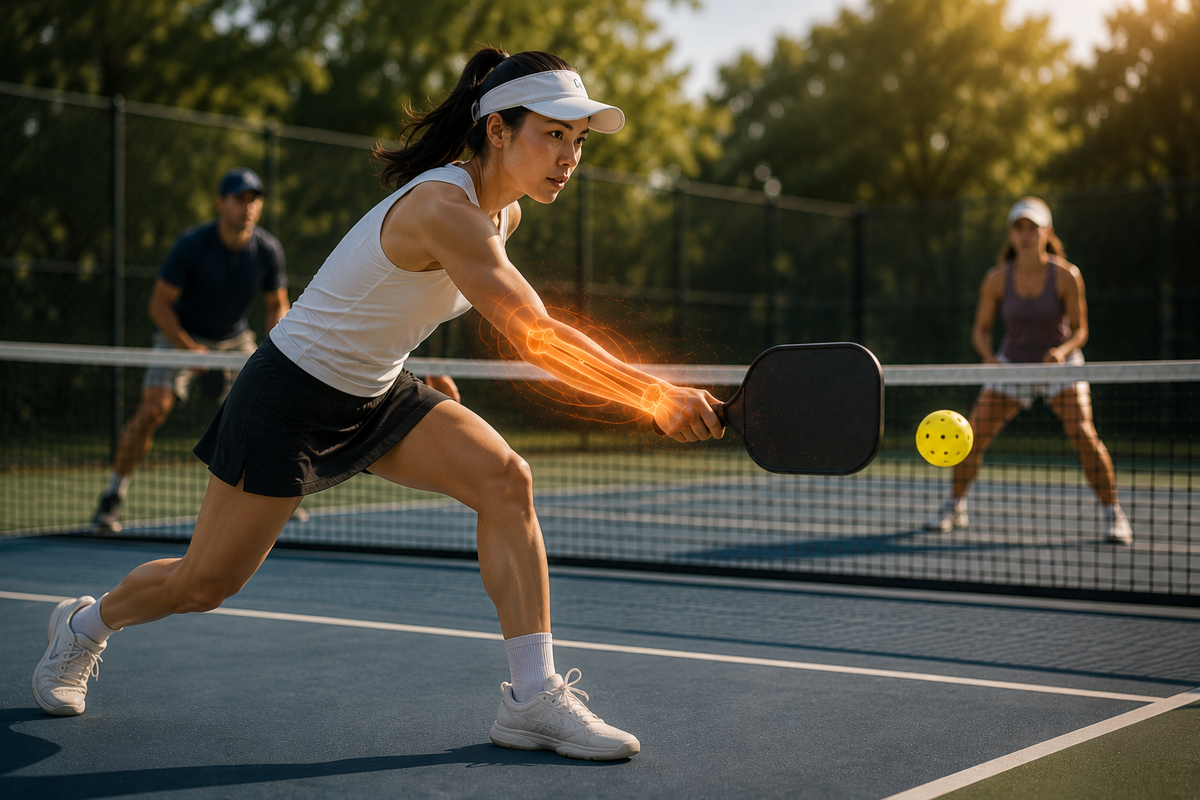
Every volley, recovery step, and shift in balance depends on your body's ability to move as one.
In recent years, pickleball has become one of the fastest-growing sports around the world, attracting players of all ages and experience levels.
Some people enjoy how easy it is to learn. Others appreciate the teamwork that develops during doubles play. Many simply love the fast exchanges at the net, the satisfaction of a well-timed volley, and the rhythm of rally after rally.
At first glance, pickleball appears to be a relatively relaxed sport.
But once you step onto the court, you quickly realize that every point demands continuous attention, quick reactions, and constant movement.
Every incoming ball requires you to read the play, adjust your position, execute your shot, and immediately prepare for the next exchange.
The game is about much more than simply returning the ball.
It is about maintaining rhythm through repeated reactions, compact footwork, and continuous recovery positioning.
Pickleball doesn't only challenge your paddle skills.
It challenges how well your entire body can coordinate movement, maintain balance, and naturally adapt to every shot throughout the match.
A Pickleball Match Rarely Gives Your Body a Chance to Rest
Because the court is smaller than a tennis court, many people assume pickleball places fewer physical demands on the body.
After playing a few matches, however, many players discover something different.
Although the distance covered may be shorter, the body is constantly preparing for the next movement.
From the very first serve, every rally requires you to track the ball, anticipate its direction, adjust your position, hit the shot, and immediately return to a ready position.
Throughout a single match, your body may repeatedly perform movements such as:
●Quick footwork
●Net volleys
●Forehand and backhand returns
●Lateral side steps
●Forward and backward movement
●Immediate recovery after each shot
●Continuous balance adjustments
Every movement naturally leads into the next.
One moment you're stepping forward to intercept a volley.
The next, you're recovering to the center of the court before reacting to another shot from a completely different direction.
While the court may be compact, the pace of movement rarely slows down.

By the end of a match, many players notice that fatigue isn't limited to the arm holding the paddle.
Their legs, core, shoulders, and the rest of the body have all worked together through countless rapid reactions, repeated footwork, and continuous adjustments in body position.
Pickleball isn't simply about hitting accurate shots.
It challenges whether your body can continue moving with coordination, stability, and rhythm throughout every rally.
Every Volley Begins with Full-Body Coordination
Many people assume pickleball relies mainly on the wrist, forearm, and paddle.
In reality, a controlled volley, a precise return, or a well-executed shot at the net involves far more than the upper body alone.
As your eyes track the ball, your feet are already adjusting their position.
As you prepare to swing, your hips and core help stabilize your center of gravity.
The moment you complete the shot, your body immediately begins preparing for the next one.
Observation.
Decision-making.
Movement.
Swing.
Contact.
Recovery.
Every stage flows naturally into the next.
Each incoming ball asks your entire body to work together.
When movement feels coordinated, footwork becomes smoother, recovery becomes more efficient, and every rally feels more connected.
Great pickleball performance isn't defined only by shot placement.
It also comes from your body's ability to coordinate movement naturally while responding to rapid exchanges, compact court coverage, and continuous changes in direction.
Better Pickleball Begins Every Day
Many players believe that simply playing pickleball regularly is enough for the body to adapt.
In reality, how you move during a match is often influenced by the habits you build long before stepping onto the court.
Everyday movement patterns gradually shape how your body responds to repeated reactions, quick footwork, and sustained activity during play.
For example:
●Sitting for long periods before playing
●Limited daily physical activity
●Skipping dynamic warm-ups
●Insufficient lower-body stability and core training
●Playing multiple sessions without adequate recovery
●Neglecting stretching and mobility work after activity
●A significant gap between daily activity levels and match intensity
Although these habits may seem unrelated to pickleball, they can gradually influence movement quality, balance, coordination, and overall comfort during play.
Rather than focusing only on match day, it is equally important to maintain healthy movement habits throughout everyday life.
Depending on your own needs, daily activities may include:
●Regular full-body movement
●Lower-body stability exercises
●Core strength and balance training
●Glute activation
●Hip and ankle mobility work
●Dynamic warm-ups before activity
●Stretching and recovery after play
●Gradually increasing training intensity
These habits can help your body adapt more naturally to pickleball's unique combination of rapid reactions, compact movement, and continuous recovery positioning.
If you're new to pickleball—or returning after a break—consider increasing your activity gradually according to your own condition. If you have questions about training or your physical condition, seek guidance from a qualified coach or healthcare professional.
Feeling Fine During the Match, Sore Afterwards?
After an enjoyable pickleball session, many players begin to notice that different parts of the body feel a little different than usual.
For example:
Tightness in the calves and thighs
A sense of fatigue around the knees
Heavier shoulders and forearms
Reduced freedom of movement through the hips and lower back
Walking, climbing stairs, or standing for extended periods feels more demanding than expected
Interestingly, these sensations often don't appear during the match itself.
While you're focused on tracking the ball, anticipating your opponent's next shot, and preparing for every volley, your attention is naturally on the game rather than on how your body is responding.
It is often not until you return home, finish showering, or wake up the following morning that you begin to notice how much work your body has actually performed.
These experiences are common after sports that involve sustained activity and repeated movement, and they do not necessarily indicate that something is wrong.
Sometimes, they simply reflect how your body has adapted to continuous reactions, frequent footwork, repeated recovery positioning, and constant adjustments in balance throughout the match.
Taking time to review your warm-up routine, daily activity level, training schedule, and recovery habits can help you better understand how your body responds to different physical demands.
If discomfort persists, returns frequently, or begins to interfere with your everyday activities, consult a qualified healthcare professional.
Designed for Every Volley
At Vital Salveo, we believe great wearable design should never be limited to a single match.
It should move naturally with every volley, every recovery step, and every quick reaction on the court.
Whether you're stepping forward to intercept a shot at the net, returning to the baseline, moving laterally during a rally, or constantly transitioning between offense and defense, every movement naturally connects to the next.
Great wearable design should never interrupt that rhythm.
Instead, it should become part of it.
Inspired by pickleball's rapid reactions, compact footwork, and continuous changes in body position, we continue exploring how advanced materials, ergonomic construction, and thoughtful design can create a more natural wearing experience.
One that integrates comfortably into every rally, every training session, and every active day.
Our Wearable Design Philosophy
Every Vital Salveo product is built upon three core design philosophies.
We believe that ideal wearable design should do more than simply cover the body.
It should move naturally with the body rather than work against it.
Pickleball demands quick reactions, continuous movement, frequent recovery positioning, and constant adjustments in balance.
That is why our design philosophy focuses on achieving harmony between comfort, ergonomic fit, and freedom of movement.
From material selection and structural engineering to the overall wearing experience, every detail is thoughtfully developed to complement different activities and everyday lifestyles.
3D Dynamic Structure | Support That Moves With You
There are very few moments of complete stillness in pickleball.
Quick split steps, lateral movement, stepping forward for a volley, and immediately recovering for the next shot all require the body to adjust continuously.
Wearable design should adapt to these movements instead of restricting them.
3D Dynamic Structure combines ergonomic shaping, Dynamic Compression, and seamless knitting technology to create a wearing experience that balances support with natural freedom of movement.
Whether you're competing on the court, practicing your footwork, training in the gym, or moving through everyday life, the design is intended to move naturally with your body.
Thermal Trigger | Designed Around Your Body's Natural Warmth
Physical activity naturally generates body heat.
Thermal Trigger is a material concept inspired by the body's own movement.
By exploring the characteristics of graphene and germanium-based materials, our design responds naturally as the fabric comes into contact with your skin and your body temperature changes during activity.
No external power source.
No additional equipment.
Just wearable technology designed to integrate naturally into everyday life.
Whether you're playing pickleball, exercising, commuting, or staying active throughout the day, the goal is to provide a comfortable wearing experience that moves with you.
Photo Dynamic Modulation | Designed for Everyday Movement
Together with 3D Dynamic Structure and Thermal Trigger, Photo Dynamic Modulation forms one of the three core philosophies behind Vital Salveo.
It reflects our continued exploration of innovative materials, comfortable wear, and everyday movement—not a medical treatment or therapeutic claim.
We are interested in more than how a product feels during a single match.
We focus on how it fits naturally into the rhythm of everyday life.
From fast-paced rallies and quick volleys on the pickleball court to work, travel, exercise, and daily routines, we believe wearable products should continue to feel light, comfortable, and natural throughout the day.
Every Movement Deserves Better Support
The appeal of pickleball extends far beyond winning points.
It lives in every rally, every volley, every recovery step, and every moment shared with teammates, friends, and family on the court.
Some people enjoy the competitive challenge.
Others simply appreciate the opportunity to stay active and spend time with people they care about.
For many, pickleball becomes part of a healthier and more active lifestyle.

Everyone moves differently.
But every movement deserves thoughtful support.
●Every reaction.
●Every volley.
●Every recovery.
●Every step.
●Every shift in balance.
Each movement reflects the remarkable coordination of different parts of the body working together.
That is why we strive to create more than just wearable products.
We aim to develop designs that integrate naturally into different ways of living, allowing people to move comfortably whether they are working, training, traveling, or enjoying their favorite sports.
Protect Every Movement.
Wake Up Your Body's Potential.
The next time you step onto the pickleball court, you're preparing for more than simply returning the next shot.
You're giving your body another opportunity to react, move, recover, and perform naturally through every rally.
At Vital Salveo, we continue exploring materials, construction, and wearable design inspired by the way the human body naturally moves.
Our goal is to create products that accompany people who value movement quality through every stage of life.
Because we believe great wearable design doesn't belong only on the court.
It belongs to every movement that happens before, during, and beyond the game.


分享:
Basketball Is About More Than Speed and Vertical Jump