


Every pass, every run, and every transition is built on whole-body coordination.
Football is loved around the world for more than the moment the ball reaches the net.
Some people enjoy the connection created through precise passing. Others are drawn to the pace of fast transitions, the challenge of beating a defender, or the satisfaction of completing a well-timed play with teammates.
What may look like a simple match is actually a continuous sequence of movement, awareness, and decision-making.
Every run, touch, pass, and shot requires the body to respond quickly, keep moving, and shift naturally between different speeds and directions.
Football does not only test speed, endurance, or technical skill.
It also challenges the entire body to maintain rhythm, control, and coordination over time.
In Football, the Body Rarely Stands Still
Football is a sport built around continuous movement.
From the opening whistle, players are constantly reading the field and adjusting to changes in speed, direction, position, and intensity.
Within only a few minutes, the body may need to:
Keep moving across the field
Accelerate into a sprint
Stop and change direction
Receive and pass the ball
Shoot, defend, and challenge for possession
Track back and accelerate again
Every movement leads into another decision.
Every transition requires the body to adapt to a new position, a new direction, and a new pace.
One moment may involve running forward to support an attack. The next may require an immediate turn and recovery into a defensive position.
A player may accelerate, slow down, rotate, and restart within only a few seconds.
That is why, after a match, the feeling is often not limited to tired legs.
The entire body has moved through a long period of repeated, high-frequency, and constantly changing activity.
Football is not only about explosive moments.
It is also about maintaining quality of movement while the game continues to change.
Every Great Play Begins With Coordination
Football is often seen as a sport defined by footwork.
But a well-timed pass, a controlled shot, or a successful defensive interception is never created by the feet alone.
As the eyes scan the field, the body is already adjusting position.
As a player prepares to receive the ball, foot placement and balance begin to change.
Once the pass or shot is complete, the body must immediately prepare for the next run.
Awareness, judgment, movement, control, passing, and repositioning are all closely connected.

When the body moves with coordination, running feels more fluid and transitions become easier to manage.
Football at its best is not only about moving faster or playing harder.
It is also about the connection between teammates and the ability of the body to move naturally through different speeds, directions, and situations.
Better Football Starts With Everyday Habits
Many people assume that playing regularly is enough for the body to adapt.
But what happens during a match is influenced by much more than the ninety minutes spent on the field.
Everyday habits gradually shape how the body responds to prolonged running, frequent transitions, sudden changes of direction, and higher levels of activity.
These habits may include:
Sitting for long periods
A lack of regular movement
Skipping warm-ups before activity
Staying in the same position for extended periods
Not allowing enough time for stretching and rest
Increasing training intensity too quickly
These habits may seem unrelated to football, but they can affect how natural, stable, and coordinated movement feels during activity.
That is why preparation should not begin only on match day.
Regular movement, lower-body stability work, balance training, dynamic warm-ups, and a gradual approach to training can all help the body feel more prepared for different levels of football activity.
Everyday routines may include:
Regular full-body movement
Lower-body stability training
Core and balance exercises
Dynamic warm-ups before activity
Stretching and rest after activity

Gradual increases in training intensity
For anyone new to football, or returning after a long break, training intensity should be adjusted according to individual condition and experience.
Anyone who is unsure about training plans or physical readiness should consider speaking with a qualified coach or healthcare professional.
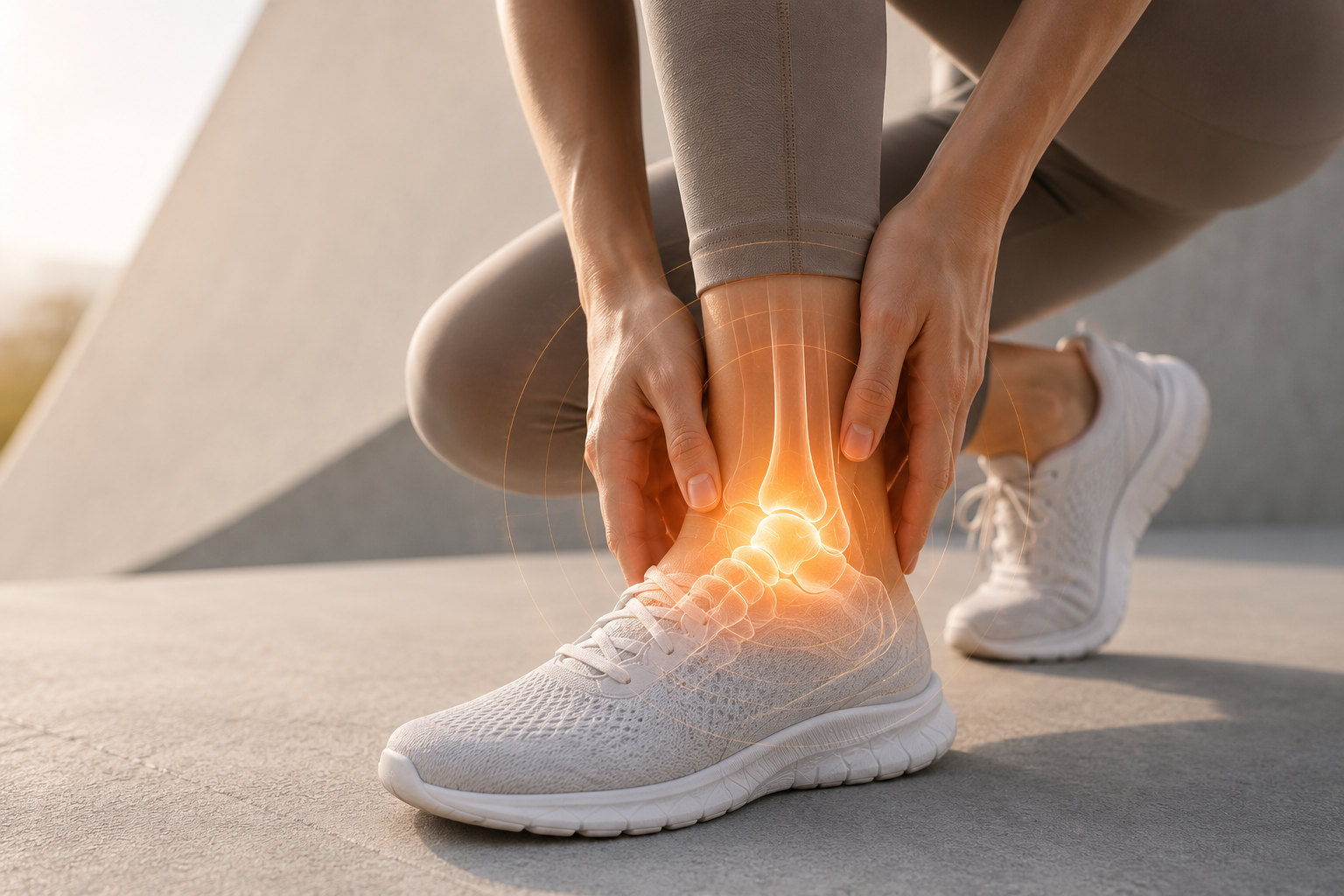
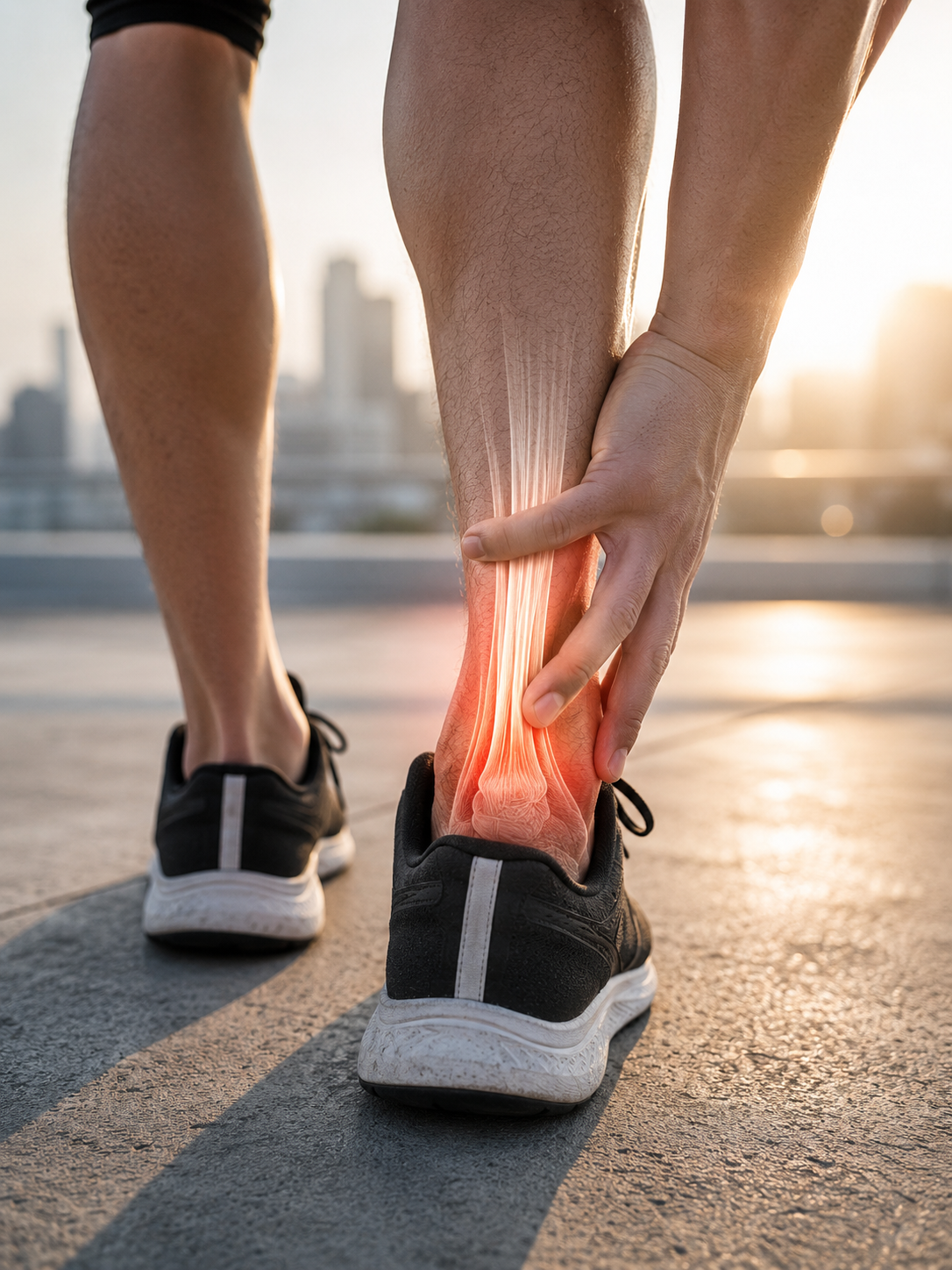
Post-Activity Sensations Are Part of Understanding the Body
After a long training session or match, some people may notice:
General fatigue through the legs
Tightness around the calves or thighs
Increased strain through the lower back after prolonged running
A heavier overall feeling in the body
Less ease of movement the following day
These sensations are not unusual after high levels of physical activity, and they do not always indicate a serious problem.
Sometimes, they simply reflect how the body is adapting to prolonged running, repeated sprinting, rapid deceleration, and frequent changes between attack and defense.
Allowing time for rest, and paying closer attention to warm-up habits, training intensity, movement patterns, and everyday routines, can help people better understand how their bodies respond to different levels of activity.
If discomfort continues, repeatedly returns, or begins to affect everyday movement, professional medical evaluation is recommended.
Designed for Every Run
At Vital Salveo, we believe that great wearable design should do more than support a single match or a single sport.
It should become a natural part of every run, every transition, and every moment of teamwork on the field.
Whether you're making an attacking run, tracking back on defense, finding the right moment to deliver a pass, or moving through sprints, quick changes of direction, and continuous play, every movement has a purpose.
Good wearable design should never interrupt that rhythm.
It should move naturally with your body and support every movement as it happens.
That is why we design with the demands of football in mind—from continuous running and rapid changes of direction to repeated bursts of acceleration and sustained movement throughout the game. By combining thoughtful structure, carefully selected materials, and wearable design, we aim to create a more natural and comfortable wearing experience that fits seamlessly into every run, every transition, and every match.
Our Wearable Design Philosophy
Vital Salveo products are built around three core design concepts.
We believe that an ideal wearable should do more than simply wrap around the body.
It should respond to natural movement.
Football involves continuous running, sudden changes of direction, repeated acceleration, and extended periods of activity.
Wearable design for these conditions should balance fit, comfort, and freedom of movement.
From structure and material selection to the overall wearing experience, every detail is considered with the goal of fitting naturally into different lifestyles and movement needs.
3D Dynamic Structure
Movement on the football field never happens in only one direction.
The body moves forward, backward, sideways, and through rotation.
It accelerates, decelerates, reaches, turns, and starts again.
Wearable design should follow these patterns rather than restrict them.
3D Dynamic Structure combines anatomical fit, Dynamic Compression, and Seamless construction to create a wearing experience designed around comfort, natural movement, and close body contact.
Whether during continuous running, directional changes, conditioning sessions, or everyday activity, the structure is designed to balance stability with freedom of movement.
Thermal Trigger
The body naturally produces heat during activity.
Thermal Trigger is a material design concept inspired by the way body temperature changes during movement.
Through the exploration of materials such as germanium and graphene, the design responds to natural body warmth and different activity conditions.
No external power source is required.
No additional device is needed.
Our aim is for material technology to fit naturally into daily life rather than change the way people live.
Whether during football training, conditioning, prolonged movement, or everyday wear, the focus remains on a comfortable and natural wearing experience.
Photo Dynamic Modulation
Photo Dynamic Modulation, together with 3D Dynamic Structure and Thermal Trigger, forms part of Vital Salveo’s overall wearable design philosophy.
It represents our continued exploration of material innovation, comfort, and everyday movement.
It is not presented as a medical treatment or as a claim of a specific therapeutic effect.
Our focus is not limited to how a wearable feels during one training session.
We also consider how it fits into the wider rhythm of everyday life.
From continuous movement on the field to work, commuting, and daily activities after training, the goal is to maintain a natural, lightweight, and comfortable wearing experience.
Every Movement Deserves Thoughtful Support
The appeal of football is not found only in scoring a goal.
It is also present in every run, every pass, every recovery, every defensive effort, and every moment of understanding between teammates.
Some people enjoy the intensity of competition.
Some play for the time spent with friends.
Others use football as a way to keep regular movement in their lives.
Everyone moves for a different reason.
But every movement deserves to be treated with care.
Every start.
Every run.
Every pass.
Every shot.
Every recovery.
Every return to position.
Each one is shaped by habits built over time and by the connection between awareness, rhythm, and coordination.
That is why our goal is not simply to create products.
It is to create wearable experiences that fit naturally into movement, sport, work, and everyday life.
Protect Every Movement.
Wake Up Your Body's Potential.
The next time you step onto the field, the experience is about more than chasing a pass or looking for a chance to score.
It is also about feeling the rhythm of every run, turn, and coordinated play.
Vital Salveo continues to explore materials, structure, and wearable design to create products that respond more naturally to the way people move.
We aim to support those who care about movement quality, wherever their daily rhythm takes them.
Because we believe that truly thoughtful wearable design should not exist only for one match.
It should move with you through every part of life.



分享:
Badminton Is More Than Speed
Basketball Is About More Than Speed and Vertical Jump