

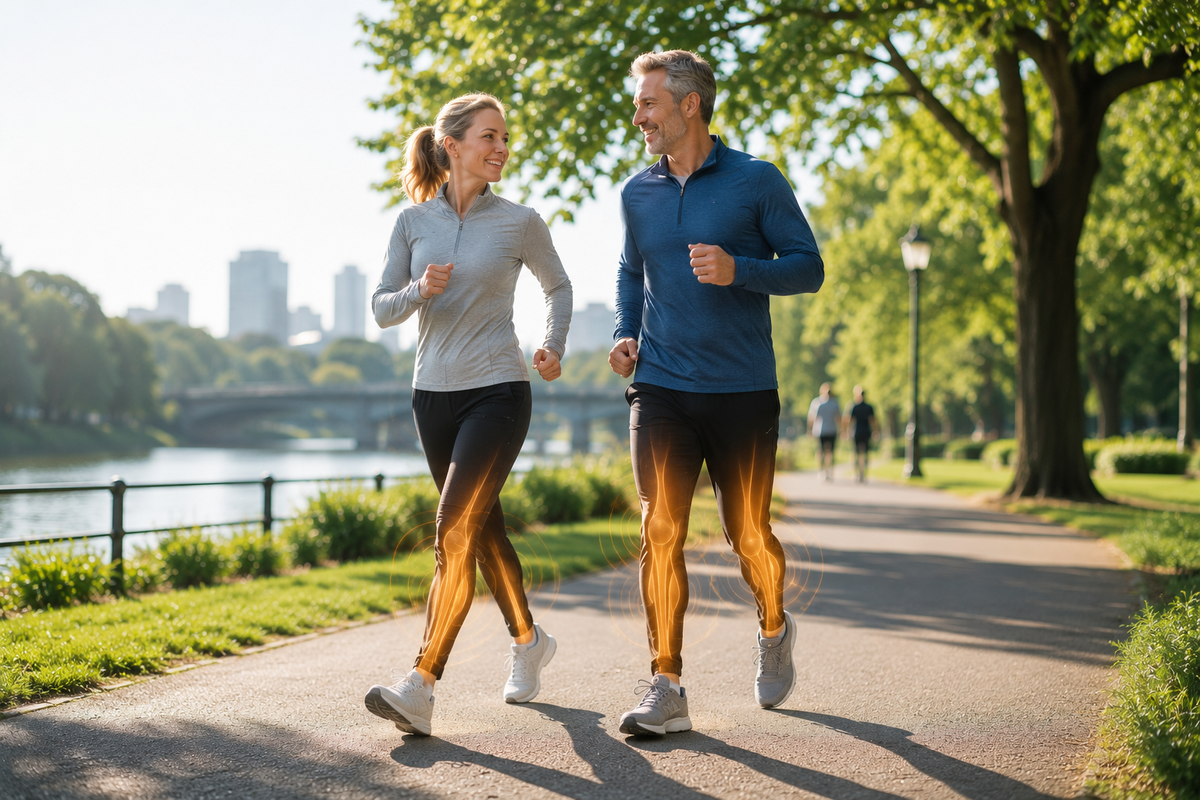
Finding the pace that suits you can help you walk more steadily—and keep going farther.
When people think about fitness walking, the first idea that often comes to mind is simple:
Walk faster.
Some believe that a quicker pace always leads to better results.
Others begin by immediately increasing their speed, hoping to cover more distance and use more energy within a limited amount of time.
As a result, walking can easily become a competition with speed.
But walking that can be maintained over time is not about moving as fast as possible.
It is about finding a pace the body can follow naturally, the breath can maintain comfortably, and the mind is willing to return to again.
When the body is pushed to take overly large steps or maintain an unfamiliar rhythm, movement can begin to feel tense.
The shoulders rise.
Breathing becomes more hurried.
Footwork becomes less organized.
A movement that should feel natural may lose its balance and flow when too much attention is placed on speed.
The real value of walking is not how fast you move within a short period of time.
It is whether each step allows the body to continue forward in a natural, steady, and sustainable way.
Is Faster Walking Always Better?
Speed can be one part of a walking routine.
But it is not the only measure that matters.
For some people, a slightly quicker pace creates a more energetic sense of movement.
For others, maintaining natural breathing and stable posture may be the more appropriate choice.
Everyone has a different lifestyle, age, movement experience, and physical condition.
The pace that works for someone else may not be right for you.
A comfortable walking rhythm should allow the body to move without unnecessary effort or tension.
Breathing should remain steady.
The steps should feel controlled.
The upper body should stay relatively relaxed.
The arms should swing naturally with the movement of the legs.
If increasing speed leads to obvious breathlessness, tension in the shoulders and neck, an unusually long stride, or the need to brace the body just to keep moving, the pace may currently be beyond what feels appropriate.
Walking faster does not always mean walking better.
What matters is whether you can maintain stable, natural, and controlled movement while continuing forward.
Effective Walking Comes From Regular Movement Habits
Many people begin a walking routine by trying to complete a long distance on the first day.
But for the body, walking regularly often matters more than completing one unusually long session.
The body does not immediately build stable movement capacity from a single day of intense activity.
Long-term change is more often shaped by habits that continue for days, weeks, and years.
Walking a short distance each day.
Standing up and going outside after a long period of work.
Adding more walking to commuting, shopping, or leisure time.
Planning a relaxed walking session on the weekend.
Even when each session is not especially long, consistency makes walking easier to sustain as part of everyday life.
What walking builds is not only a higher step count.
It also builds familiarity with movement.
It creates a habit of staying active.
And it allows walking to become part of the body’s natural daily rhythm.
Finding Your Own Pace Matters More Than Keeping Up With Others
Walking may seem simple, but it is easy to become overly focused on numbers.
How many kilometers did you complete?
How many steps did you take?
How long did it take?
Were you faster than yesterday?
These records can be useful for observing activity patterns.
But they should not become the only purpose of every walk.
The body feels different from one day to the next.
Sleep, work stress, weather, terrain, and recovery can all affect the pace that feels appropriate.
Some days may be suitable for walking a little faster.
Other days may require a slower rhythm.
Some people enjoy completing one longer route.
Others may prefer dividing their walking into several shorter periods.
What matters most is not matching someone else’s speed.
It is finding a pace that feels natural enough to maintain.

When breathing, posture, and footwork work together, each step becomes smoother.
When the body begins to tense, the steps lose rhythm, or the sound of each landing becomes heavier, it may be time to adjust.
Slowing down does not mean falling behind.
It simply gives the body a chance to return to a rhythm it can continue.
Walking Is a Whole-Body Movement
Many people think walking is simply a matter of moving the feet forward.
But every step involves the entire body.
As the foot meets the ground, the ankle adapts to the surface and the changing position of the step.
The knees and hips help the body bend, extend, and shift weight.
The core helps stabilize the torso.
The upper body remains naturally aligned.
The arms swing with the movement of the legs, helping the overall rhythm feel smoother.
These areas do not work independently.
They coordinate from one step to the next, allowing the body to move forward naturally.
That is why effective walking requires more than leg strength.
It also depends on whole-body coordination.
When footwork, breathing, arm movement, and weight transfer work together, every step becomes more stable.
Walking is no longer only about completing a distance.
It becomes a process in which the whole body continues to participate, coordinate, and control movement.
Every Step Is About Movement Quality, Not Just Step Count
During a walk, it is easy to focus on steps, speed, or distance.
But this can make us overlook the small changes happening in the body.
A longer stride is not always better.
What matters is whether the step feels natural.
More forceful arm movement is not always more effective.
What matters is whether the upper body can stay relaxed and coordinated.
Walking longer is not always the most meaningful goal.
What matters is whether the body can continue moving with stability and flow.
When the shoulders begin to rise, the body leans too far forward, or each landing becomes noticeably heavier, the body may be using extra tension to maintain the pace.
At that point, forcing yourself to move faster may be less helpful than adjusting your posture and rhythm.
Let the steps become natural again.
Allow the breathing to settle.
Bring the movement back to a controlled state.
Walking is not only a practice of continuing forward.
It is also a way to rediscover the balance between posture, breathing, and rhythm in every step.
You May Not Notice It During the Walk—But Your Body Does
During a walk, attention is often focused on the route and the next step.
It may only be after the activity ends that different parts of the body become more noticeable.
You may experience:
Gradual fatigue in the calves or thighs.
A greater sense of engagement in the glutes.
More awareness in the soles of the feet or ankles.
Fatigue in the core or back after a longer walk.
More noticeable breathing and heart rate than during an ordinary stroll.
These sensations may occur when you are first building a walking habit, returning to regular activity, or gradually increasing your walking time.
In many cases, they may simply reflect the body readjusting to sustained walking and whole-body participation.
However, if you experience persistent pain, noticeable swelling, numbness, dizziness, chest discomfort, or any other symptom that affects daily life or movement safety, stop the activity and seek evaluation from a qualified healthcare professional.
Let Walking Become Part of Everyday Life
Once you find a pace that suits you, the next step is allowing walking to become more than an occasional form of exercise.
Walking does not need one fixed format.
It does not require a specific distance every time.
Some people prefer setting aside one complete period for activity.
Others add more walking to their commute.
Some use lunch breaks, evenings, or weekends to keep the body moving.

You can begin with a few simple habits:
Start at a slower pace so the body can gradually enter the activity.
Begin with a time and distance that suit your current condition.
Maintain natural breathing instead of holding your breath for speed.
Keep the stride comfortable rather than forcing it to become longer.
Choose routes that are safe, even, and well lit.
Wear suitable shoes and clothing.
In hot weather, pay attention to hydration and the time of day.
After walking, allow time for rest and observe how the body responds.
The right walking routine is not one that produces the same number every day.
It is one that can adjust to your lifestyle and physical condition while preserving the habit of regular movement.
When walking becomes a natural part of life, each small step begins to build a more consistent movement rhythm.
What Matters Most Is Being Willing to Walk Each Day
The value of walking is not limited to how many kilometers you complete in one session.
It is not only about whether you were faster today than yesterday.
Walking is also a daily decision to stand up, move, and care for yourself.
Sometimes that means completing an entire route.
Sometimes it means finding ten extra minutes in a busy day.
Sometimes it means recognizing fatigue, slowing down, and continuing in a gentler way.
Walking does not require you to prove something every day.
It only needs to become something you are willing to continue.
As movement becomes part of life, the body becomes more familiar with the rhythm of walking.
Those ordinary steps gradually become part of the mobility you carry into the future.
What matters is not being the fastest on one particular day.
It is still being able to walk comfortably toward the places you want to go, many years from now.
Designed for Every Step
At Vital Salveo, we believe great wearable design should not only help people cover more distance.
It should help every step feel natural, comfortable, and free.
Whether during a fitness walk, a relaxed stroll, travel, commuting, or everyday movement, everyone has a pace of their own.
Some people value comfort and fit during longer periods of walking.
Some want a greater sense of stability across changing surfaces and movement patterns.
Others care about breathability, flexibility, and how naturally a product fits into everyday clothing.
The right wearable experience should not require the body to adapt to the product.
The product should move more naturally with each step, turn, and shift in body weight.
Supporting the body as it continues forward at its own pace.
Our Wearable Design Philosophy
Every Vital Salveo product is built around three core design philosophies.
We believe ideal wearable design should do more than surround the body.
It should create a natural balance between comfort, fit, stability, and freedom of movement.
Whether during walking, work, travel, or everyday life, the product should follow the body’s natural way of moving.
From material selection and three-dimensional construction to the overall wearing experience, every design decision begins with human movement.
3D Dynamic Structure
Support That Moves With Every Natural Step
Every step in walking depends on different parts of the body working together.
3D Dynamic Structure combines ergonomic design, Dynamic Compression, and seamless three-dimensional knitting to create a balance between fit, stability, and freedom of movement.
The structure is designed to move naturally with each step, bend, stretch, and shift in body weight.
Not to restrict the body from moving forward.
But to accompany every step as it naturally happens.
Thermal Trigger
Inspired by the Body’s Natural Warmth
The body naturally generates warmth during movement.
Thermal Trigger is Vital Salveo’s design concept inspired by the body’s natural activity.
Through the material characteristics of graphene and germanium, the design is intended to integrate naturally into fitness walking, casual walks, commuting, and everyday movement.
No external power source.
No additional equipment.
Just a design concept created to accompany the natural movement that continues throughout the day.
Photo Dynamic Modulation
Designed for Different Everyday Walking Rhythms
Together with 3D Dynamic Structure and Thermal Trigger, Photo Dynamic Modulation forms one of Vital Salveo’s three core design philosophies.
It represents our ongoing exploration of innovative materials, wearable comfort, and the quality of everyday movement—not any medical function or therapeutic purpose.
There is no single correct walking speed.
Some people enjoy starting the day with a morning walk.
Some prefer slowing down in the evening.
Others use small moments throughout the day to build their activity level.
Our goal is to create a wearing experience that feels natural, comfortable, and easy through every start, turn, and step forward.
Every Step Deserves Better Support
Walking offers more than the completion of a route.
It reminds us that movement does not need to be faster in order to have value.
Sometimes, slowing down helps the breathing become steady again.
Adjusting the stride can help the body return to a more natural rhythm.
Resting at the right time can make the next activity easier to continue.
What is worth building is not one fastest record.
It is the willingness to let walking become part of life.
Step by step.
Day by day.
Moving forward in a way that suits you.
Because the best pace is not the speed other people notice.
It is the rhythm that helps you keep walking longer—and toward more of what life has to offer.
Protect Every Movement.
Wake Up Your Body’s Potential.
Whether today involves fitness walking, travel, commuting, or simply taking a walk with family, every step deserves care.
At Vital Salveo, we continue exploring wearable designs that work more naturally with the way the body moves.
Our goal is to support people who value movement quality as they find their own pace across different moments of everyday life.
Because great wearable design does not belong only to exercise.
It belongs to every step of daily life.



Share:
Healthy Aging Does Not Begin Someday
Does Climbing Stairs Feel More Difficult Than It Used To?